Singapore Work Permit Visa Guide: Essential Insights 2026
Dreaming of building your career in Singapore’s thriving economy? Navigating the singapore work permit visa landscape is your essential first step.
This comprehensive 2026 guide unpacks everything foreign professionals, skilled workers, and students need to know. You will discover the latest work pass categories, eligibility rules, application steps, employer obligations, and costs.
Gain expert strategies to maximise your approval chances. Let us help you unlock the right pathway and make informed choices for a successful future in Singapore.
Overview of Singapore’s Work Permit Visa System
Singapore’s robust economy attracts professionals and businesses worldwide. To work or train here legally, understanding the singapore work permit visa system is crucial. The Ministry of Manpower (MOM) oversees all work pass matters, ensuring that each applicant and employer follows strict regulations. The landscape continually evolves, reflecting Singapore’s economic priorities and workforce strategies.

Categories of Work Passes
Singapore offers several work pass categories, each tailored to specific workforce segments. The main types are:
- Employment Pass (EP): For foreign professionals, managers, and executives with recognised qualifications and a minimum monthly salary (SGD 5,600+ in 2026).
- S Pass: For mid-level skilled staff, subject to minimum salary and quota requirements.
- Work Permit: For semi-skilled and unskilled workers in sectors like construction, manufacturing, and domestic work.
- EntrePass: For innovative entrepreneurs who wish to set up and operate businesses in Singapore.
- Personalised Employment Pass (PEP): For high-earning professionals who want greater job flexibility.
- Overseas Networks & Expertise (ONE) Pass: For top global talent with outstanding achievements or high salaries.
The MOM is responsible for evaluating applications, monitoring quotas, and enforcing compliance. A work pass allows the holder to legally work in Singapore, while a visit pass is strictly for short-term stays without employment rights.
Recent trends for the singapore work permit visa system include rising salary thresholds, the adoption of points-based systems (such as COMPASS for EP), and digitalisation of application processes. For example, the finance sector often has higher salary benchmarks, while construction faces strict quota ceilings. In 2024, foreign workers made up about a third of Singapore’s total workforce, with the largest numbers in construction and services (Foreign workforce numbers).
Sector-specific quotas mean that, for instance, a construction firm can only employ a certain ratio of foreign workers compared to locals, while financial institutions may have greater flexibility but stricter qualification checks. Choosing the right pass type is essential, as eligibility and obligations differ significantly. For a detailed comparison of major passes, see this guide on the Difference Between Work Permit, EP, and S Pass.
Who Needs a Work Permit Visa?
Anyone who is not a Singapore citizen or permanent resident and intends to work, intern, or train in Singapore generally requires a singapore work permit visa. This includes:
- Professionals relocating for a new job
- Recent graduates on internships or traineeships
- Entrepreneurs launching start-ups
- Intra-company transferees for multinational corporations
Short-term business visitors, such as those attending meetings or conferences, do not need a work pass but must not engage in productive work. The MOM distinguishes between these scenarios, and working without the correct pass can result in severe penalties, including fines, deportation, and blacklisting.
There are some exemptions. Certain activities, like participating in government-invited performances or short-term technical seminars, are allowed under a visit pass for up to 90 days per calendar year, provided the employer submits an e-notification to MOM. However, these exemptions are limited and closely monitored.
Legal compliance is vital. Employers and applicants must ensure they match the visa type to the job function and applicant’s profile. Failing to obtain the appropriate singapore work permit visa can jeopardise both the individual’s career and the employer’s ability to hire foreign staff in the future.
Types of Singapore Work Permit Visas in 2026
Navigating the singapore work permit visa landscape in 2026 means understanding the full range of passes available for foreign professionals, skilled workers, trainees, and their families. Each pass is designed for specific roles and applicant profiles, with distinct requirements, privileges, and limitations. Selecting the right singapore work permit visa is essential for legal employment and a smooth stay in Singapore.
Below is a summary table comparing the main categories of singapore work permit visa options:
| Pass Type | Target Group | Key Criteria | Validity | Quota/Levy |
|---|---|---|---|---|
| Employment Pass (EP) | Professionals | Min. SGD 5,600, COMPASS | Up to 2 years | No |
| S Pass | Mid-skilled | Min. SGD 3,300, quota, levy | Up to 2 years | Yes |
| Work Permit | Low/semi-skilled | No min. salary, strict quotas | Up to 2 years | Yes |
| EntrePass | Entrepreneurs | 30% ownership, funding | 1 year | No |
| PEP | High-earning professionals | Min. SGD 22,500 | 3 years | No |
| ONE Pass | Top global talent | Salary/achievement-based | 5 years | No |
| Trainee Passes | Interns, students | Institutional/salary criteria | 6-12 months | Yes/No |
| Dependant/LOC | Family/ancillary roles | Linked to main pass holder | Linked | No |
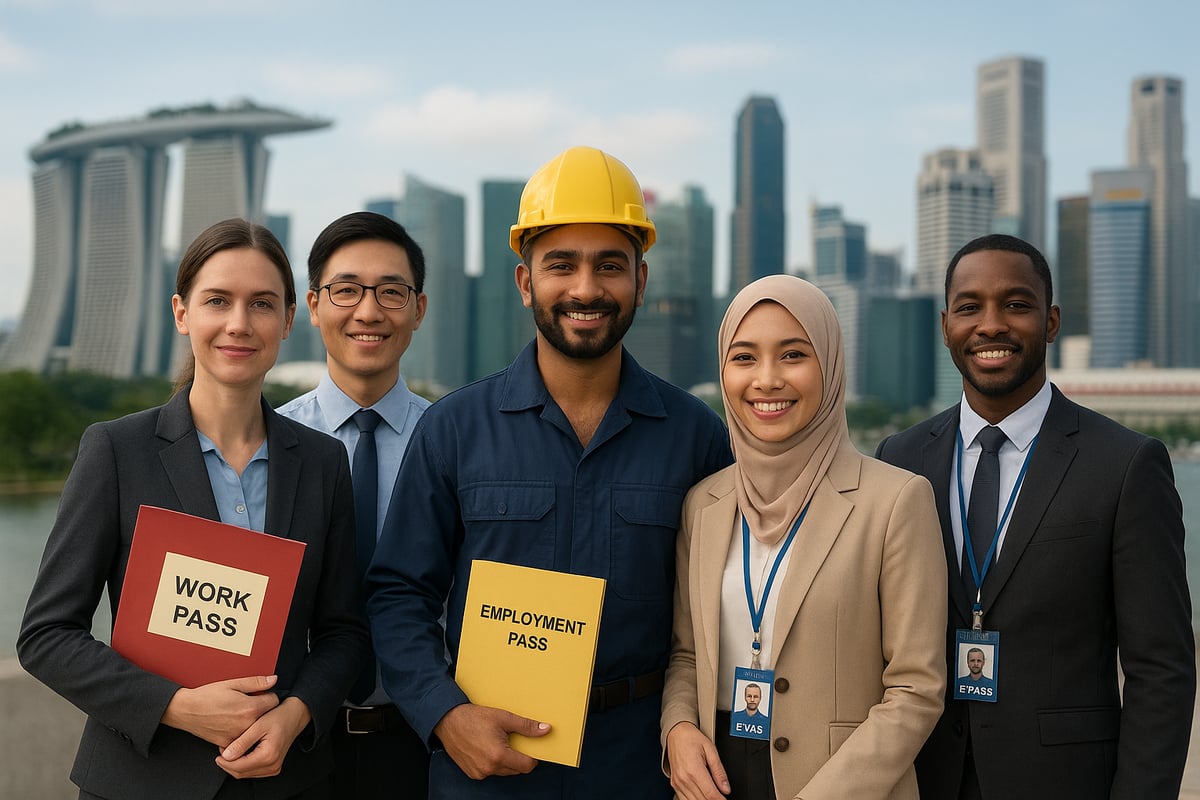
Professional Work Passes
Singapore attracts global professionals with a range of work visas tailored to high-skilled talent. The flagship singapore work permit visa for professionals is the Employment Pass (EP), suitable for executives, managers, and specialists earning at least SGD 5,600 per month in 2026. Applicants must also score sufficiently on the COMPASS points framework, which considers qualifications, salary, diversity, and support for local employment. For an in-depth look at COMPASS and how to optimise your score, visit the Work Pass Solution – E Pass COMPASS resource.
The EntrePass is designed for innovative entrepreneurs and startup founders. Applicants need to own at least 30% of the business and meet funding or innovation criteria. This pass is ideal for those launching businesses in tech, finance, or other high-growth sectors.
The Personalised Employment Pass (PEP) offers flexibility for high earners, requiring a monthly salary of SGD 22,500 or more. Unlike the EP, it allows holders to switch employers without reapplying, but it is non-renewable after three years.
Singapore’s Overseas Networks & Expertise (ONE) Pass is aimed at top global talent, allowing holders to take on multiple roles or start ventures concurrently. Eligibility is based on a high salary threshold or significant achievements in business, science, or sports.
Choosing the right professional singapore work permit visa depends on your career goals, salary, and sector.
Skilled and Semi-Skilled Worker Passes
For mid-level skilled staff, the S Pass is a popular singapore work permit visa, requiring a minimum monthly salary of SGD 3,300 in 2026. Employers must adhere to quota limits and pay a monthly levy per S Pass holder. They are also responsible for providing medical insurance and enrolling workers in the Primary Care Plan.
The standard Work Permit is for semi-skilled and unskilled foreign workers in construction, manufacturing, marine, process, and services. While there is no official minimum salary, sector-specific quotas and levies apply. Employers must ensure strict compliance with dependency ceilings and sector restrictions.
A significant change in 2026 is the discontinuation of the performing artiste work permit scheme from June, which will directly affect foreign artists and entertainment venues. This update highlights the importance of staying current with singapore work permit visa regulations and industry-specific policies.
Trainee and Student Passes
Singapore’s robust training and internship ecosystem offers several options under the singapore work permit visa system. The Training Employment Pass (TEP) is for foreign students or graduates seeking short-term professional training, provided they meet salary or institutional requirements.
The Work Holiday Pass (WHP) caters to students and recent graduates aged 18 to 25 from selected countries, allowing up to six months of work and travel in Singapore. In addition, the Work and Holiday Visa Programme is available for Australian and New Zealand citizens with a university degree, valid for up to 12 months.
The Training Work Permit (TWP) supports semi-skilled or unskilled trainees for up to six months, subject to employer quotas and levies. Each pass under the singapore work permit visa system for trainees and students is designed to promote skills transfer and cultural exchange, while enforcing clear duration and eligibility limits.
Dependant and Ancillary Passes
Family members of main pass holders can access Singapore’s workforce through dependant and ancillary passes. The Dependant’s Pass is available to legally married spouses and children under 21 of EP or PEP holders, subject to the sponsor’s minimum income.
For spouses of Singapore citizens or permanent residents holding a Long-Term Visit Pass (LTVP or LTVP+), the Letter of Consent (LOC) allows legal employment. Requirements for each singapore work permit visa type in this category are tied to the principal holder’s status and eligibility.
These passes are essential for supporting family unity and enabling accompanying partners to pursue professional or personal development in Singapore.
Work Pass Exemptions
Not all foreign nationals require a singapore work permit visa for every work-related activity. Certain short-term activities, such as attending conferences, providing technical services, or performing at government events, are exempt if conducted within the 90-day annual cap.
However, employers or event organisers must submit an e-notification to the Ministry of Manpower before the activity begins. This ensures compliance and minimises legal risks. Understanding these exemptions is crucial for businesses and individuals planning short-term assignments in Singapore without triggering the need for a formal singapore work permit visa.
Eligibility Criteria and Employer Obligations
Meeting the eligibility criteria for a singapore work permit visa is crucial for both applicants and employers. Singapore’s immigration framework is designed to attract talent while ensuring local workforce priorities are maintained. Understanding these requirements lays the groundwork for a successful application and long-term career prospects.

General Eligibility Requirements
Applicants for a singapore work permit visa must meet several core requirements, varying by pass type and sector. Salary thresholds are a primary consideration. For example, as of 2026, Employment Pass (EP) applicants must earn at least SGD 5,600, while S Pass holders require a minimum of SGD 3,300. These thresholds may increase with age or sector demands, so it is vital to check the latest guidelines before applying.
Qualifications also play a significant role. Most professional passes require recognised degrees or relevant experience. For EP applicants, the COMPASS points system evaluates factors such as qualifications, salary, diversity, and support for local employment. Scoring enough COMPASS points is essential for approval.
Employers must advertise job vacancies on the MyCareersFuture portal for at least 14 days before hiring foreign professionals. This ensures fair consideration of local candidates. For S Pass and Work Permit holders, employers need to comply with sector-specific dependency ceilings and levies, which restrict the number of foreign workers relative to local staff.
A table summarises key requirements:
| Pass Type | Minimum Salary (SGD) | Points System | Job Ad Requirement | Quota/Levy Applies |
|---|---|---|---|---|
| Employment Pass | 5,600+ | COMPASS | Yes | No |
| S Pass | 3,300+ | No | Yes | Yes |
| Work Permit | None | No | No | Yes |
Employers must also provide medical insurance and, for S Pass and Work Permit holders, enrol staff in a Primary Care Plan (PCP). Use the Ministry of Manpower’s Self-Assessment Tool to check if you meet the eligibility for your desired singapore work permit visa. Salary requirements may increase as applicants age, so planning ahead is wise.
Employer Sponsorship and Compliance
To sponsor a singapore work permit visa, employers need a valid Unique Entity Number (UEN) and must be financially sound. They are responsible for following fair hiring practices, such as advertising roles properly and ensuring non-discriminatory selection processes.
Payroll reporting is essential, along with timely renewal of work passes. Employers face sector-specific quotas and levies, particularly in industries like manufacturing or construction. Exceeding quotas or failing to pay levies can result in significant penalties, including suspension from hiring foreign staff.
A case study from the manufacturing sector illustrates the consequences of quota breaches. A company that exceeded its S Pass quota not only faced fines but was temporarily barred from applying for new passes. This highlights the importance of strict compliance for every singapore work permit visa application.
Common compliance risks include late renewals, inaccurate payroll reporting, and failure to maintain required insurance. To avoid these pitfalls, employers and applicants should review guidance such as the 3 Top Common Mistakes Made by Work Permit Holders, which provides practical advice on staying compliant throughout the application and renewal process.
By thoroughly understanding your obligations, you can ensure smooth processing and continued eligibility for any singapore work permit visa.
Step-by-Step Singapore Work Permit Visa Application Process
Navigating the singapore work permit visa application process can feel overwhelming at first. By breaking it down into clear, manageable steps, you can approach each stage with confidence and clarity. Here’s a practical guide to help you move from preparation to a successful outcome.
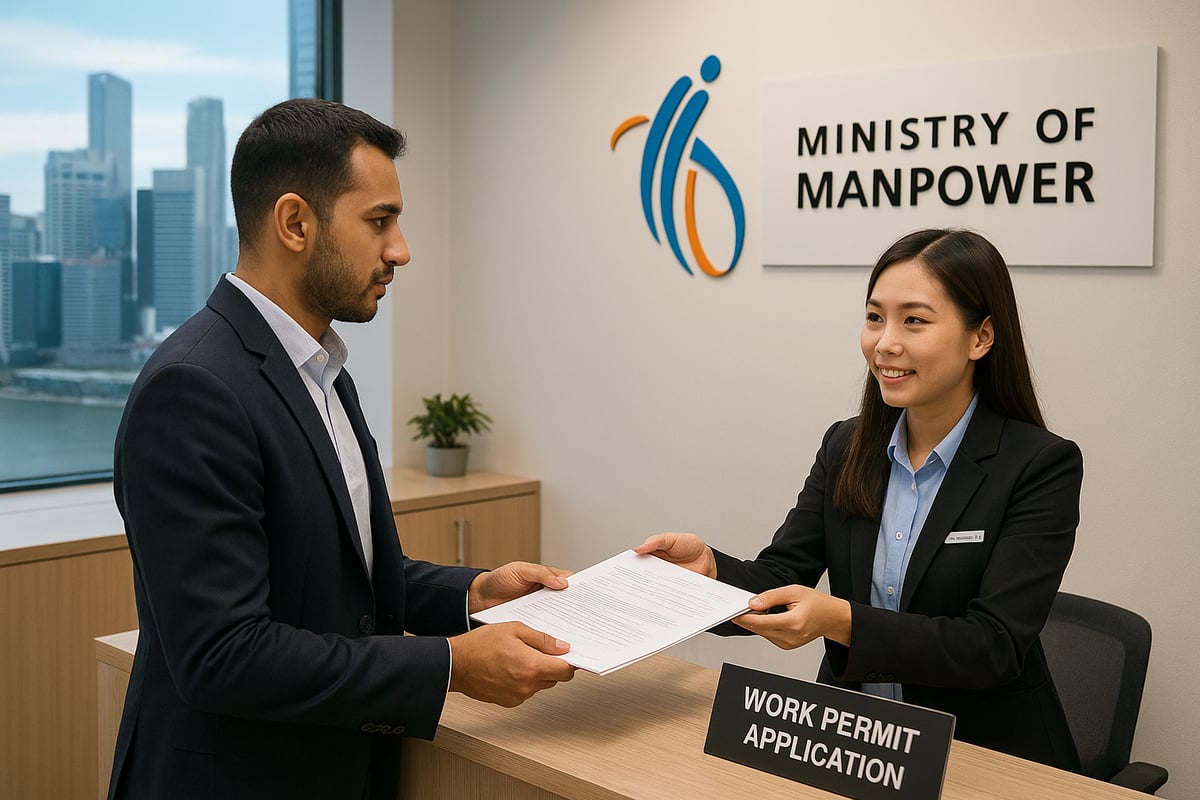
Step 1: Preparing Your Application
Preparation is the foundation of a successful singapore work permit visa application. Begin by gathering essential documents, including your valid passport, recognised degree certificates, detailed CV, employment contract, and your employer’s company profile.
If any of your documents are not in English, arrange for certified translations and notarisation. This ensures compliance with the Ministry of Manpower’s (MOM) strict documentation standards.
Use MOM’s Self-Assessment Tool to check your eligibility before proceeding. This tool helps you understand if you meet the criteria for your intended pass, saving time and reducing the risk of rejection.
Employers play a vital role at this stage. They must verify quota availability, ensure company compliance, and confirm that job advertisements meet the requirements set by MOM.
Step 2: Online Submission and MOM Review
Once your documents are ready, your employer or authorised agent submits your singapore work permit visa application through the appropriate online portal. For example, the EP eService is used for Employment Passes, while the S Pass portal handles S Pass applications. Some passes, like the Work Holiday Pass, allow direct candidate applications.
All supporting documents must be uploaded in the correct format, and a non-refundable application fee (typically S$105–S$225) is paid at this stage. Double-check accuracy, as incomplete or incorrect information can delay processing.
Processing times vary by pass type and case complexity, usually ranging from one to eight weeks. During this time, MOM may request additional information or clarifications. Prompt responses help keep your application on track.
Step 3: In-Principle Approval (IPA) and Entry to Singapore
If your singapore work permit visa application is successful, you will receive an In-Principle Approval (IPA) letter. This document is essential for entering Singapore and completing the next steps. The IPA typically has a validity of six months for most passes.
The IPA letter outlines any outstanding requirements, such as medical examinations or biometric data collection. Schedule and complete these checks promptly to avoid delays.
For example, an Indian IT professional offered an Employment Pass must present their IPA at immigration upon arrival, then book a medical check at a designated clinic. The IPA also provides information on pass collection and next steps.
Step 4: Pass Issuance and Formalities
After arriving in Singapore and completing all IPA requirements, you can proceed to pass issuance. This involves collecting your physical singapore work permit visa card at the Immigration & Checkpoints Authority or having it delivered by courier.
At this point, verify all personal details on the card for accuracy. Employers are responsible for ensuring new employees complete orientation, receive required medical insurance, and are registered with the Primary Care Plan where applicable.
Employers must also report the pass issuance to MOM and maintain records for compliance. This step marks the formal start of your employment journey in Singapore.
Step 5: Renewal, Upgrades, and Appeals
Singapore work permit visa holders must monitor renewal timelines closely. Renewals depend on continued employment, updated salary levels, and compliance with quotas or levies. Start the renewal process early to avoid lapses.
If you wish to upgrade from a Work Permit to an S Pass or Employment Pass, review the new requirements, which may include higher salary thresholds or additional qualifications. The appeals process allows you to address rejections by providing extra documentation or clarifications.
For a deeper look at the challenges and strategies around upgrading, you may find Factors Affecting Your Work Permit Upgrade helpful. This resource covers common pitfalls and expert tips for success.
A careful, proactive approach at each step will help maximise your approval chances and set you on a strong path in Singapore’s dynamic workforce.
Costs, Processing Times, and Common Challenges
Understanding the full landscape of singapore work permit visa costs, timelines, and challenges is crucial for applicants and employers. Navigating these elements with precision can make the difference between a smooth approval and unnecessary delays or rejections.
Fees and Costs
The singapore work permit visa process involves several mandatory fees. Government application fees range from S$105 to S$225 per applicant, depending on the pass type. On top of that, monthly levies apply, particularly for S Pass and Work Permit holders. For example, S Pass holders incur a monthly levy of S$650, while Work Permit levies vary by sector and workforce composition.
Employers should also budget for medical examinations, which are often required before pass issuance. Insurance premiums, translation, and notarisation of documents can add to the overall expenses. Below is a sample cost breakdown for hiring five S Pass holders:
| Cost Item | Amount (SGD) | Total (SGD) |
|---|---|---|
| Application Fees | 105 x 5 | 525 |
| Issuance Fees | 225 x 5 | 1,125 |
| Medical Exams | 60 x 5 | 300 |
| S Pass Levies (monthly) | 650 x 5 | 3,250 |
| Insurance | 90 x 5 | 450 |
| Total (1st month) | 5,650 |
Employers must factor in recurring costs, especially levies, when planning for workforce expansion. For the latest fee structures and regulatory updates, refer to Singapore announces changes to its foreign workforce policy.
Processing Times and Delays
Processing times for a singapore work permit visa depend on the type of pass and the completeness of the application. Typically, Employment Passes and S Passes are processed within one to eight weeks. Straightforward applications with all required documents are usually faster.
Delays can arise due to missing information, incomplete supporting documents, or quota checks. Sector-specific reviews, such as in construction or manufacturing, may extend waiting periods. Fast-track processing is sometimes available for select categories, especially for critical talent or in-demand skills, but is not guaranteed.
Applicants should monitor their application status regularly via the Ministry of Manpower (MOM) portal. Early submission and proactive communication with employers can help avoid unnecessary holdups. Staying updated on policy changes is vital, as requirements and processing standards may shift in response to workforce trends.
Common Pitfalls and How to Avoid Them
Many singapore work permit visa applications are rejected due to preventable mistakes. Common pitfalls include:
- Submitting incomplete or incorrect documents (e.g. missing transcripts, outdated passports)
- Miscalculating employer quotas or levies, leading to ineligible submissions
- Not meeting salary thresholds, especially for older applicants or specific sectors
- Overlooking new policy requirements or COMPASS points for Employment Passes
- Failing to renew passes on time or misreporting payroll information
For example, a recent case saw an application denied because the employer did not properly calculate the S Pass quota for their sector. Such errors can result in significant delays, additional costs, and in some cases, penalties.
To avoid these pitfalls, employers and applicants should consult the latest guidelines and consider using MOM’s Self-Assessment Tool. For more detailed information on workforce composition and quota impacts, see Population in Brief 2025.
Tips for a Successful Application
Securing a singapore work permit visa is achievable with careful planning. To maximise approval chances:
- Begin document preparation early and verify all requirements
- Use the MOM Self-Assessment Tool to check eligibility before applying
- Ensure employer quotas and levies are accurately calculated
- Double-check that salary and qualification criteria are met for the relevant pass
- Seek professional guidance for complex situations or if you face a previous rejection
Employers should conduct periodic compliance audits to prevent future issues. Applicants benefit from staying informed about policy updates and leveraging expert support for their singapore work permit visa journey.
Special Insights and 2026 Updates
Singapore’s approach to foreign talent continues to evolve in 2026, bringing new opportunities and challenges for those seeking a singapore work permit visa. Staying ahead means understanding policy shifts, anticipating strategic moves, and adapting to future trends.
Key Changes for 2026
Several significant updates define the singapore work permit visa environment in 2026. Salary thresholds for Employment Pass and S Pass holders have risen, reflecting Singapore’s emphasis on attracting highly skilled professionals. The COMPASS points system has been refined, adding weight to sector-specific skills and experience.
A major headline is the Singapore to end work permit scheme for foreign performing artists from June 2026, marking a shift in policy for the arts and entertainment sector. This change affects agencies and applicants in performance-related roles.
Employers face new obligations, including broader Primary Care Plan coverage and expanded medical insurance requirements. Digitalisation of applications is now standard, streamlining processes but demanding greater accuracy from both employers and applicants.
Strategic Considerations for Applicants and Employers
Choosing the right singapore work permit visa in 2026 involves careful planning. Applicants should align their job function and experience with the most suitable work pass, paying close attention to changing eligibility criteria and COMPASS point requirements.
Employers must manage workforce composition to stay within updated quotas and levies. For those on an Employment Pass, planning for permanent residency becomes more important as competition tightens. Upgrading from Work Permit to S Pass or Employment Pass is a common pathway for skilled workers, but requires meeting new salary benchmarks and sectoral needs.
| Strategy | Applicant Benefit | Employer Benefit |
|---|---|---|
| Early eligibility checks | Higher approval rates | Reduces processing time |
| Ongoing compliance review | Minimises legal risks | Avoids penalties |
| Leveraging upgrades | Improved career prospects | Retains talent |
Employers should also conduct regular audits of their singapore work permit visa processes to avoid compliance pitfalls and ensure continued access to global talent.
Future Outlook and Opportunities
Singapore remains a premier destination for international professionals, and the singapore work permit visa system is likely to see further refinements. Authorities may introduce new pass types or pilot schemes to attract specialised talent in emerging industries.
Applicants and employers should monitor official Ministry of Manpower updates and consult trusted advisors to stay informed. Adapting to policy changes and digital innovations is crucial for long-term success.
With a focus on skills, compliance, and strategic planning, both individuals and organisations can continue to thrive in Singapore’s dynamic economic environment.
Navigating Singapore’s work permit and visa landscape can feel overwhelming, especially with the 2026 updates and evolving requirements. Whether you are considering your first application, upgrading your work pass, or planning a long-term move, it helps to have a trusted partner guiding you every step of the way. At Kenneth & Co., we specialise in simplifying the process, offering tailored strategies and expert advice to help you achieve your goals in Singapore. If you are ready to take the next step or want personalised guidance for your situation, Book an appointment and start your journey with confidence.


