Singapore Work Pass Application Guide: Essential Steps 2026

Singapore stands out as a premier global destination for ambitious professionals, offering a dynamic environment and world-class career prospects. At the heart of every successful journey lies the singapore work pass application, which serves as the essential gateway to securing coveted roles and unlocking new opportunities.
Navigating the evolving application process can be challenging, especially with new requirements set for 2026. Securing the right work pass not only advances your career but also opens doors for family relocation and potential long-term residency.
This comprehensive guide is designed to clarify every stage of the singapore work pass application process. You will find straightforward insights on eligibility, documentation, application steps, and expert strategies for success. Explore the key types of work passes, learn about policy changes, and discover practical tips to maximise your chances in 2026.
Understanding Singapore Work Passes: Types, Functions, and 2026 Updates
Singapore’s Ministry of Manpower (MOM) oversees a robust framework designed to attract skilled talent from around the world. With more than 1.86 million non-residents contributing to the nation’s growth in 2024, foreign professionals now make up 51 percent of Singapore’s workforce. Navigating the singapore work pass application process is essential for anyone seeking to build a successful career in this dynamic economy.
Whether you are a first-time applicant or planning a move with your family, selecting the right pass is the foundation of your journey. The MOM offers a variety of work passes tailored to different skills, industries, and career goals. Making an informed choice ensures your application aligns with your long-term ambitions in Singapore.

Overview of Singapore’s Work Pass System
The MOM has built a transparent and adaptable system to manage the influx of global talent. This system ensures that local employment opportunities are protected while enabling companies to access skills not readily available in the domestic market. The singapore work pass application process is central to this strategy, acting as a gateway for professionals, technicians, and entrepreneurs.
Statistics highlight the significance of work passes in Singapore’s economy. In 2024, non-residents formed a substantial part of the workforce, reflecting the city-state’s global appeal. Choosing the correct pass is crucial, as each type comes with distinct eligibility requirements and benefits. Aligning your profile with the appropriate pass maximises your chances of approval and supports your professional objectives.
Main Types of Work Passes in 2026
Singapore’s work pass landscape in 2026 is both diverse and evolving. The main options include:
- Employment Pass (EP): For professionals and managers, with a minimum salary of S$5,600 (S$6,200 in financial services) and subject to the COMPASS framework.
- S Pass: Designed for mid-level skilled workers, requiring a minimum salary of S$3,150 (S$3,650 in financial services) and subject to sector quotas.
- Work Permit: For semi-skilled roles in sectors like construction, manufacturing, and services, governed by a fixed quota system.
- Personalised Employment Pass (PEP): For high earners (minimum S$22,500), offering flexibility and not tied to a specific employer.
- Overseas Networks & Expertise Pass (ONE Pass): For global leaders, with a minimum S$30,000 salary and multi-company operation.
- Tech.Pass and EntrePass: For senior tech professionals and entrepreneurs/startups.
For a detailed comparison of these passes, see Work Permit, EP, and S Pass differences. Understanding these categories is the first step in a successful singapore work pass application.
2026 Policy Changes and Trends
Upcoming 2026 policy updates will further shape the singapore work pass application landscape. Salary thresholds for EP and S Pass are set to rise, reflecting Singapore’s intent to attract top-tier talent. The COMPASS points system, now mandatory for EP renewals, introduces a transparent approach to assessing eligibility. Applicants must score at least 40 points, taking into account salary, qualifications, workforce diversity, and support for local employment.
Quota adjustments will also impact S Pass and Work Permit holders, with a continued focus on building a strong local workforce. Employers are encouraged to maintain a balanced team, fostering both innovation and inclusivity. These changes mean applicants must stay informed and ensure their profiles meet evolving standards to secure a work pass.
Pass Comparison Table and Use-Case Examples
A clear comparison of key work passes helps applicants match their backgrounds to the right category. Below is a side-by-side overview:
| Pass Type | Eligibility | Min Salary | Validity | Renewal | Sector Restrictions |
|---|---|---|---|---|---|
| Employment Pass | Professionals | S$5,600 | Up to 2 yrs | Yes | Most sectors |
| S Pass | Skilled Technicians | S$3,150 | Up to 2 yrs | Yes | Sector quotas apply |
| Work Permit | Semi-skilled roles | No min salary | Up to 2 yrs | Yes | Sector, nationality limits |
| PEP | High earners | S$22,500 | 3 yrs | No | No sector restrictions |
| ONE Pass | Global leaders | S$30,000 | 5 yrs | Yes | Multiple companies |
Example scenarios:
- A tech executive with global experience may qualify for the ONE Pass.
- A skilled technician in manufacturing should consider the S Pass.
- Entrepreneurs launching a startup can apply for the EntrePass.
Matching your background to the right pass is vital for a smooth singapore work pass application process.
Family and Dependant Passes
Singapore supports family relocation for eligible professionals. Holders of EP, S Pass, PEP, or ONE Pass earning at least S$6,000 per month may apply for Dependant’s Passes for spouses and children. The Long Term Visit Pass (LTVP) is available for parents and other dependants, subject to further criteria.
It is essential to synchronise family pass applications with the main work pass to ensure legal stay and access to public services. Keeping all documentation updated and aligned will prevent complications down the line.
Core Eligibility Requirements for Singapore Work Passes
Securing the right singapore work pass application starts with understanding eligibility. Each pass type has unique requirements, but certain criteria apply across the board. Knowing these conditions early will help you prepare a strong submission and avoid unnecessary setbacks.
General Eligibility Criteria Across All Passes
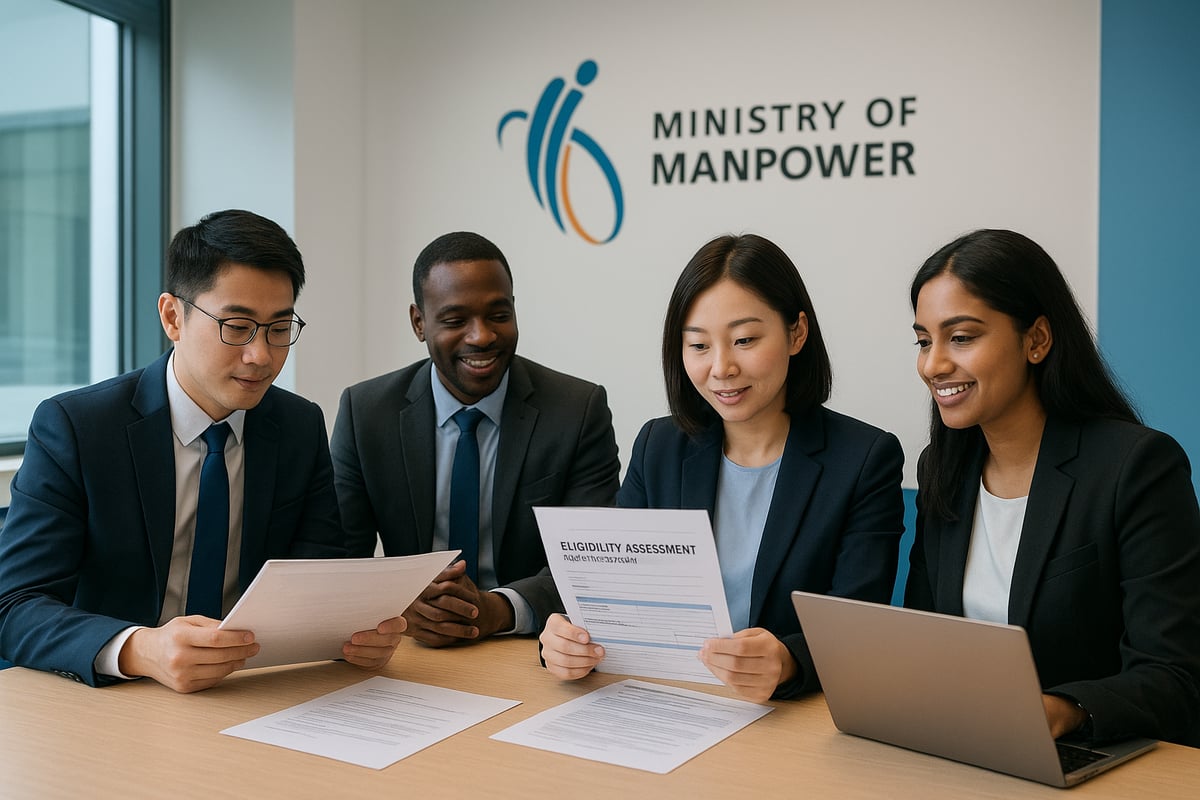
The singapore work pass application process requires a valid job offer from a Singapore-based employer for most passes, excluding the Personalised Employment Pass (PEP) and Overseas Networks & Expertise Pass (ONE Pass). Applicants typically need recognised educational qualifications, such as a degree, diploma, or technical certification. In addition, relevant professional experience in the targeted industry is crucial.
Employers must verify that your qualifications match the role. This alignment is vital, as mismatches can lead to application rejection. Always ensure your documents and experience meet the minimum standards before proceeding with your singapore work pass application.
Pass-Specific Eligibility and Salary Thresholds
Each work pass has its own eligibility and salary benchmarks. For example, Employment Pass (EP) applicants must secure a managerial or executive position with a minimum salary of S$5,600, or S$6,200 if working in financial services. S Pass applicants need a minimum salary of S$3,150 or S$3,650 for financial roles, and must fit within sector quotas.
Work Permit holders are typically semi-skilled workers in sectors like construction or manufacturing and are subject to quota and levy requirements instead of a salary threshold. The PEP is designed for high earners, requiring a monthly salary of at least S$22,500. The ONE Pass targets global leaders with a minimum monthly salary of S$30,000. Assess your profile carefully before starting your singapore work pass application.
| Pass Type | Minimum Salary (2026) | Key Criteria |
|---|---|---|
| Employment Pass | S$5,600 (S$6,200 FS) | Manager/executive, COMPASS |
| S Pass | S$3,150 (S$3,650 FS) | Mid-level, quota, levy |
| Work Permit | None | Sector, quota, levy |
| PEP | S$22,500 | High earner, not tied to job |
| ONE Pass | S$30,000 | Global talent, multi-company |
COMPASS Framework Explained
From 2026, the COMPASS (Complementarity Assessment Framework) system is compulsory for all EP applicants. This transparent, points-based approach evaluates candidates on salary, qualifications, workforce diversity, and support for local employment. You must score at least 40 points to pass.
Points are allocated as follows: higher salaries and degrees score more, while companies employing a diverse team or supporting Singaporean talent also earn points. For details on how to maximise your score within the singapore work pass application process, see the E Pass application under COMPASS framework.
Example:
- Salary: 20 points (if 10% above minimum)
- Qualifications: 10 points (degree)
- Diversity: 5 points (company workforce mix)
- Support for locals: 5 points (local PMET ratio)
- Total: 40 points (eligible)
Quota and Levy Systems
Quota and levy rules play a significant role in the singapore work pass application, especially for S Pass and Work Permit holders. For S Pass, quotas are typically capped at 10 percent for services and 15 percent for construction or manufacturing. Employers must also pay a monthly levy for each foreign worker, with rates varying by sector and company size.
Work Permit quotas are even stricter, and exceeding limits can cause automatic rejections. Employers can estimate their quota availability using the MOM’s online calculator. Always confirm quota space before starting your singapore work pass application to avoid delays.
Additional Factors: Fair Consideration and Job Advertising
Singapore’s Fair Consideration Framework (FCF) ensures that local talent gets priority. Employers must advertise job openings on MyCareersFuture.sg for at least 14 days and consider all local candidates before submitting a singapore work pass application for a foreigner.
Documentation of the recruitment process, including interview records, is mandatory. Non-compliance can result in rejection or delays. This step is vital for transparency and demonstrates a commitment to fair hiring practices.
Example Profiles and Eligibility Assessments
Using the MOM’s self-assessment tool can help you gauge your eligibility before submitting a singapore work pass application. For example, a tech executive with a degree and a S$8,000 monthly offer may qualify for an EP, while a skilled technician with a S$3,500 salary could be eligible for an S Pass, subject to sector quotas.
Always review your profile against current requirements. If you are unsure, consult with your employer or an immigration expert before proceeding with your singapore work pass application.
Step-by-Step Singapore Work Pass Application Process
Securing your future in Singapore begins with a clear understanding of the singapore work pass application process. Each stage, from choosing the right pass to collecting your card, is crucial for a seamless relocation experience. Below, we break down the process into practical, actionable steps for 2026 applicants.
Step 1: Determining the Right Pass and Preparing for Application
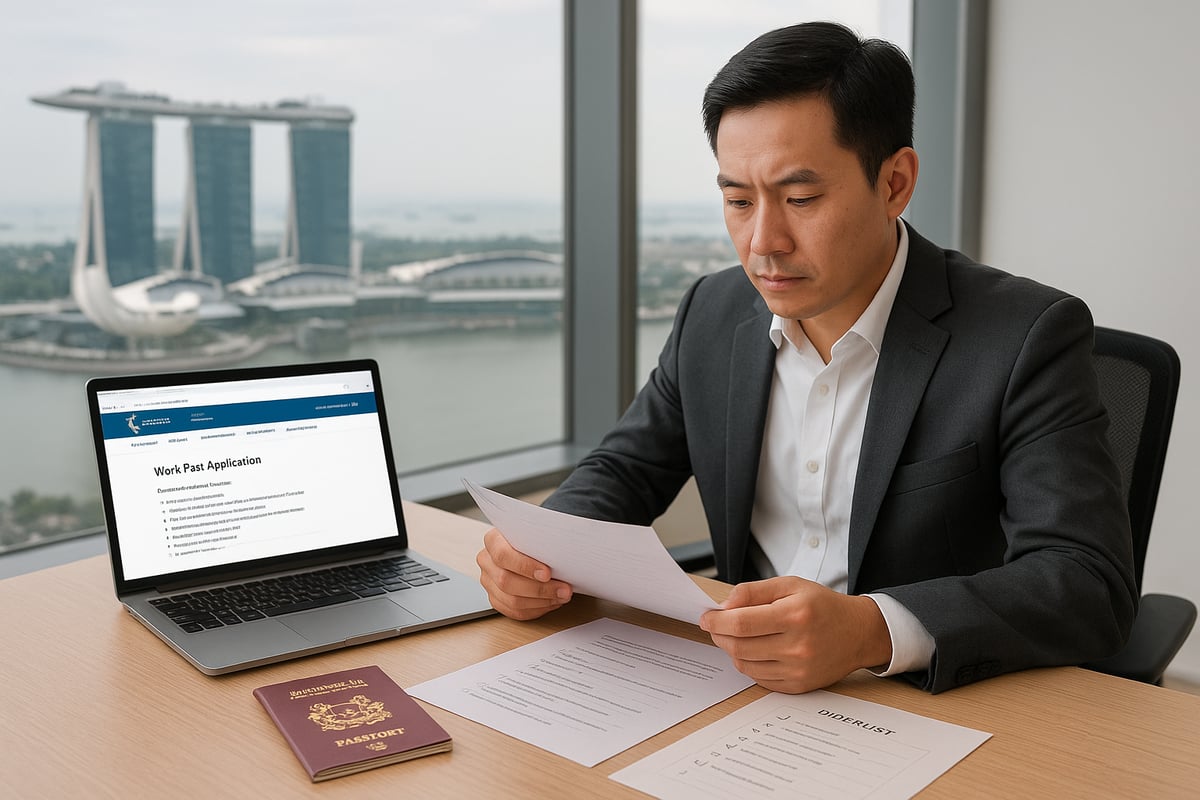
The first step in the singapore work pass application process is identifying the correct pass for your profile. Consider your job role, salary, sector, and long-term career plans. For example, professionals in managerial roles may qualify for an Employment Pass, while mid-skilled workers might need an S Pass.
Consult your employer’s HR team or a specialist if you have a complex background or are unsure about eligibility. Review the latest Ministry of Manpower (MOM) updates and use their eligibility calculators for the most accurate assessment. If you are thinking about future career progression, learning about Upgrading from Work Permit to EP can help you plan strategically.
Stay proactive and gather information early to avoid surprises later in your singapore work pass application journey.
Step 2: Gathering Required Documents
A successful singapore work pass application depends on having the correct and complete documentation. Start by preparing your valid passport, job offer letter, educational certificates, and proof of relevant work experience. Depending on the pass type, you may also need medical check-up forms, letters of consent, or professional body registration letters.
All non-English documents must be translated and notarised. For example, an S Pass applicant will need to provide a diploma or technical certificate, while a Personalised Employment Pass candidate will need to show proof of high earnings. Create a checklist and double-check each item before submitting your singapore work pass application to prevent unnecessary delays.
Step 3: Employer’s Role in the Application
Your employer plays an essential part in the singapore work pass application. They are responsible for submitting your application through the MOM online portal and paying the required processing fee. Employers must also comply with the Fair Consideration Framework, which means advertising the job on MyCareersFuture.sg and considering local candidates before hiring a foreign applicant.
The employer should keep records of the recruitment process, including interview notes and advertising periods. This documentation may be requested during the assessment of your singapore work pass application. Open communication with your employer ensures all requirements are met and your application is submitted accurately.
Step 4: Application Processing and In-Principle Approval (IPA)
Once your singapore work pass application is submitted, processing times vary. Typically, Employment Pass and S Pass applications take 3 to 8 weeks, while Personalised Employment Pass and ONE Pass may require up to 8 weeks for assessment.
If approved, you will receive an In-Principle Approval (IPA) letter. This document acts as a single-entry visa to Singapore and provides instructions for your next steps, including required medical checks and a checklist of supporting documents. Note the IPA validity period — 60 days for S Pass and 6 months for most other passes. Keep this timeline in mind to avoid missing important deadlines in your singapore work pass application process.
Step 5: Issuance of Pass and Arrival Formalities
With your IPA in hand, you can enter Singapore and begin the next stage of your singapore work pass application. Some applicants must complete a medical examination at a local clinic. After arrival, your employer will request the official pass issuance through MOM’s portal and pay the issuance fee.
You must provide details such as your local address, insurance information, and embarkation or disembarkation card. The notification letter issued at this point allows you to start working and travelling within Singapore while you wait for your pass card. Keep all relevant documents accessible for this stage of your singapore work pass application.
Step 6: Registration and Pass Collection
The registration process is a key part of the singapore work pass application. First-time pass holders, or those who have not registered biometrics in the last five years, must visit the MOM Services Centre. Here, you will provide fingerprints and a photograph for your pass.
The pass card is usually delivered within four working days after successful registration. During this period, the notification letter continues to allow you to work and travel. Be sure to monitor card delivery and confirm all personal details are correct to complete your singapore work pass application smoothly.
Step 7: For Family Members and Dependants
If your pass allows, you may wish to bring family members to Singapore. The process for dependants runs parallel to the main singapore work pass application. Family members will need to submit marriage certificates, birth certificates, and proof of relationship as part of their application.
Dependant’s Pass and Long Term Visit Pass applications must align with the validity of the main work pass. Processing times are typically similar, but synchronising family applications can help avoid gaps in stay or work rights. Prepare these documents early in your singapore work pass application to streamline the transition for your loved ones.
Real-World Application Timelines and Tips
On average, the singapore work pass application process takes 4 to 8 weeks from initial submission to final pass collection. Complex cases or incomplete documentation can extend this timeline.
To improve your chances, double-check every form and document, respond promptly to MOM requests, and keep communication open with your employer. Review sample application journeys and learn from common challenges faced by previous applicants. Staying organised and informed gives you the best shot at a successful singapore work pass application and a smooth start in Singapore.
Essential Documentation and Common Pitfalls
Preparing the right documents is a crucial step in any singapore work pass application. Both applicants and employers must understand the specific requirements for each pass type to avoid unnecessary delays or rejections. Organising paperwork early and ensuring every detail is accurate can make the process much smoother.

Comprehensive Documentation Checklist
A successful singapore work pass application always starts with a thorough checklist. While requirements may vary slightly between pass types, applicants should prepare:
- Valid passport (with at least six months' validity)
- Official job offer letter or employment contract
- Educational certificates and transcripts
- Professional qualifications or licences (if required)
- Passport-sized photographs (recent)
- Supporting documents for dependants, if applying for family passes
For passes like the S Pass and Employment Pass, translation and notarisation of non-English documents are mandatory. Always verify the latest requirements on the Ministry of Manpower (MOM) website before submitting.
Common Documentation Errors
Many singapore work pass application rejections stem from simple documentation mistakes. Frequent issues include:
- Incomplete forms or missing signatures
- Untranslated or uncertified foreign documents
- Outdated certificates or expired passports
- Inconsistent details between application forms and supporting documents
To understand how these errors can impact eligibility and upgrades, review this guide on factors impacting work permit upgrades. Addressing these pitfalls early can prevent costly delays.
Quality Control and Verification
Quality control is essential for every singapore work pass application. Both the applicant and employer should double-check all paperwork for accuracy and completeness. Employers hold responsibility for verifying educational and professional credentials before submission.
Any discrepancies or errors can lead to longer processing times or outright rejection. Adopt a checklist approach, and ensure every document matches the details in the online application.
Special Cases: Additional Documents
Some singapore work pass application scenarios require extra documentation. For regulated professions, applicants must provide registration or support letters from the relevant professional body in Singapore. Those entering the financial sector may need to submit additional proof of qualifications.
Medical check-up reports are often needed, especially for S Pass and Work Permit holders. These must be obtained from recognised clinics in Singapore and submitted according to MOM guidelines.
Document Retention and Updates
After a singapore work pass application is submitted, keep copies of every document and receipt. This practice helps with future renewals, appeals, or upgrades. Inform MOM immediately if your employment, address, or family status changes, and update supporting documents as needed.
Staying organised and proactive with your paperwork ensures smoother transitions and maintains compliance throughout your employment journey.
Navigating Challenges and Maximising Success in 2026 Applications
Applying for a singapore work pass application in 2026 can be both exciting and daunting. With evolving criteria and rigorous checks, applicants must approach the process with strategy and precision. By understanding common challenges and embracing proven tactics, you can greatly increase your chances of approval.
Strategies for a Strong Application
A successful singapore work pass application starts with aligning your job title and responsibilities to the Ministry of Manpower’s expectations. Ensure that your offered salary not only meets but ideally exceeds the current benchmarks. Highlight qualifications and relevant experience clearly in your documents.
Staying updated on policy changes is critical. For instance, the recent Singapore's 2025 work permit policy changes emphasise stricter eligibility and the COMPASS framework. Tailoring your application to these updates demonstrates awareness and preparedness.
Responding to Requests for More Information
During your singapore work pass application, you might receive requests from MOM for further documentation or clarification. Respond swiftly and ensure your responses are accurate and complete. Delays or incomplete submissions can extend processing times or even result in rejection.
Keep a checklist of all previously submitted documents. This helps you provide consistent information and avoid discrepancies that could raise concerns.
Appeals and Reapplication Tips
If your singapore work pass application is rejected, do not lose hope. Review MOM’s feedback carefully to understand the reasons. Often, rejections stem from missing documents, unclear roles, or salary below the threshold.
Prepare a strong appeal by addressing each concern directly. Submit new evidence or clarifications as needed. If reapplying, update your application to reflect any improvements or changes in your profile.
Tracking Application Status and Next Steps
After submitting your singapore work pass application, track its progress through the MOM online portal. This platform offers real-time updates and alerts on your application's status, such as In-Principle Approval (IPA) or requests for more information.
On receiving IPA, begin preparing for arrival, housing, insurance, and any family arrangements. In case of rejection, review the feedback and decide on your next steps promptly.
Case Studies and Success Factors
Many applicants have turned initial setbacks into success stories with persistence and attention to detail. For example, candidates who corrected minor errors or clarified job roles saw their singapore work pass application approved on reapplication.
Statistically, error-free and well-documented applications enjoy higher approval rates. Diligence, clarity, and alignment with MOM requirements are your best tools for success.
Expert Support: When to Seek Professional Guidance
Securing a singapore work pass application can be a turning point in your professional journey. The process, however, often presents intricate requirements and evolving regulations. For many, navigating this landscape confidently means knowing when to seek expert support.
Professional consultants play a vital role in the singapore work pass application process, especially for applicants with unique profiles, complex histories, or those aiming for passes in regulated industries. Their expertise ensures your submission is accurate, timely, and aligned with the Ministry of Manpower’s expectations. By leveraging their experience, you reduce the risk of costly errors and increase your chances of approval. Consultants can also advise on strategic pathways for future upgrades or permanent residency.
The Value of Immigration and Work Pass Consultants
The singapore work pass application process can be demanding, particularly for those with non-standard profiles or prior rejections. Consultants offer tailored strategies, ensuring each application meets the precise requirements for every pass type. They handle complex documentation, anticipate regulatory updates, and provide peace of mind by managing communications with authorities. Many applicants find that the investment in expert support pays off through higher approval rates, fewer delays, and a smoother relocation experience. For those managing family relocations, consultants can coordinate dependant passes and synchronise timelines, making the transition more efficient.
Choosing the Right Consultant
Selecting the right partner for your singapore work pass application is crucial. Look for consultants with a proven track record, positive client testimonials, and transparent processes. Ask about their experience with cases similar to yours, their success frameworks, and how they stay updated on the latest policy changes. Reputable consultants will offer clear fee structures and provide ongoing support, not just during the application, but for renewals and upgrades as well. Preparing a list of questions regarding their approach and support resources ensures you make an informed choice.
When DIY Makes Sense
For straightforward singapore work pass application cases, self-application may be a viable option. If you have clear eligibility, standard documentation, and no previous rejections, applying independently can be efficient and cost-effective. However, it is important to recognise the risks: missing details or regulatory changes can result in delays or rejections. Applicants should weigh the complexity of their case and consider professional support if any uncertainties arise. For first-time applicants, reviewing official MOM guides and using online tools is highly recommended.
Resources and Further Reading
Whether you choose professional support or the DIY path for your singapore work pass application, staying informed is essential. The Ministry of Manpower’s official guides, eligibility tools, and contact channels provide authoritative information. Community forums and support groups offer practical advice from other applicants, helping you navigate real-world challenges. For updates on policy shifts, such as quota changes or salary benchmarks, resources like Singapore: Changes to S Pass and Work Permit regulations can be valuable. Comprehensive preparation and reliable resources are key to a successful application journey.
Navigating Singapore’s work pass landscape can feel overwhelming, especially with evolving requirements for 2026 and so many options to consider. If you want reassurance that your application is on track, or if you’re facing a complex situation, you don’t have to go it alone. At Kenneth & Co., we specialise in guiding professionals and families through every stage—from eligibility assessment right down to error-free documentation. Our expertise helps maximise your chances of success and takes the stress out of the process. Ready to move forward with confidence? Book an appointment today.


