SG Immigration Guide 2026: Your Pathway to Success
Singapore stands at the forefront of global business, education, and quality of life in 2026. Its reputation as a dynamic, forward-looking city attracts talented individuals and families seeking new opportunities.
Interest in sg immigration continues to surge, fuelled by supportive policies, a robust economy, and a welcoming environment for skilled migrants. Whether you are a professional, student, or entrepreneur, Singapore offers a pathway to success.
This guide is designed to be your comprehensive roadmap for navigating the immigration process. You will find step-by-step strategies, the latest updates, and expert tips tailored to maximise your chances.
Explore each section to discover actionable insights on eligibility, application steps, work passes, education opportunities, common challenges, and valuable resources. Let this guide demystify your journey towards achieving your goals in Singapore.
Understanding Singapore’s Immigration Landscape in 2026
Singapore continues to stand out as a top destination for global talent and families seeking new opportunities. The sg immigration environment in 2026 is dynamic, shaped by changing economic needs and a commitment to maintaining Singapore’s reputation as a thriving, cosmopolitan hub.

Policy Overview and Government Agencies
The sg immigration system is managed by two main government agencies: the Immigration and Checkpoints Authority (ICA) and the Ministry of Manpower (MOM). ICA is responsible for permanent residency, citizenship, and long-term visit passes, while MOM oversees work pass applications for foreign professionals.
In 2026, Singapore’s priorities focus on attracting high-skilled talent, particularly in technology, finance, and healthcare. Policy frameworks emphasise economic contribution, integration potential, and alignment with national workforce needs. The government regularly updates criteria to ensure the continued competitiveness and sustainability of the sg immigration process.
Recent Trends and Statistical Data
Recent years have seen a notable increase in skilled migrants, especially in digital and STEM sectors. Singapore’s population is approximately 5.9 million, with around 1.6 million non-residents contributing to the workforce. The approval rate for permanent residency (PR) applications has stabilised at 30–35%, while citizenship approval rates hover near 50%.
Key trends shaping sg immigration include:
- Growing demand for tech professionals and digital specialists
- Sector-specific talent shortages in healthcare and engineering
- Rising interest from families seeking education and quality of life
These trends highlight Singapore’s proactive approach in adapting immigration policies to address labour market gaps and demographic challenges.
| Population Segment | Number (2026 est.) | Percentage |
|---|---|---|
| Citizens | 3.6 million | 61% |
| Permanent Residents | 540,000 | 9% |
| Non-residents | 1.6 million | 27% |
Global Impacts and 2026 Policy Updates
The sg immigration landscape is also influenced by global events. Post-pandemic economic recovery, competition for talent in Asia, and evolving geopolitical dynamics have prompted Singapore to refine its immigration strategies.
For 2026, several key policy changes are in effect:
- Implementation of points-based assessment systems for certain passes
- Enhanced digital application platforms for faster processing
- Stricter documentation and verification requirements
These updates are designed to ensure transparency, efficiency, and alignment with Singapore’s long-term goals. For a detailed look at these policy shifts and what they mean for applicants, refer to Trends in immigration policies.
Success Stories and Insights
Singapore continues to attract ambitious professionals, entrepreneurs, and families. Recent successful cases include tech innovators gaining PR through the Tech.Pass, healthcare experts filling vital roles, and families securing citizenship after years of community engagement.
What makes sg immigration appealing? It is the combination of economic stability, world-class infrastructure, and strong support for integration. Singapore offers clear pathways for career growth, education, and long-term settlement, making it a preferred destination for those seeking a new chapter abroad.
In summary, understanding the sg immigration landscape in 2026 requires staying informed about evolving policies, recognising sector trends, and leveraging official resources. With the right strategy, Singapore remains a land of opportunity for global talent and their families.
Step-by-Step Guide: Navigating the Immigration Process
Ready to embark on your sg immigration journey? Navigating the process can seem daunting, but breaking it down into clear steps will make it manageable. Whether you are a skilled professional, student, or relocating your family, following this roadmap will help maximise your chances of success.

Step 1: Assessing Eligibility
The first step in the sg immigration process is to evaluate your eligibility for Singapore’s various passes and residency options. Criteria differ for Permanent Residency (PR), work passes, student passes, and citizenship. Factors such as age, educational background, work experience, salary, and family ties are all considered.
Singapore has introduced updated points-based frameworks for 2026, making your personal profile even more important. For example, the COMPASS system scores candidates on qualifications, salary, and sector relevance.
Use this checklist to assess your readiness:
- Valid passport
- Recognised qualifications
- Relevant work experience
- Sufficient salary for the chosen pass
- Family connections, if applicable
Understanding these requirements early is key to a smooth sg immigration application.
Step 2: Preparing Your Documentation
Once eligibility is confirmed, gather all required documents for your sg immigration application. Essential items include your passport, degree certificates, employment letters, and proof of finances. Many applicants face rejections due to incomplete or outdated paperwork.
Common mistakes include submitting expired documents or overlooking required translations and notarisation. To avoid these pitfalls:
- Double-check document validity
- Ensure all forms are complete
- Translate and notarise non-English documents
Recent data shows that error rates in applications remain a leading cause for reapplication. Investing time in careful document preparation can prevent unnecessary delays in your sg immigration process.
Step 3: Choosing the Right Immigration Pathway
Selecting the correct pathway is central to your sg immigration plan. Singapore offers several routes: Employment Pass (EP), S Pass, Dependant Pass, Student Pass, PR, and Citizenship. Each has unique criteria, processing times, and approval rates.
Here’s a comparison of main options:
| Pathway | Main Criteria | Approval Rate | Processing Time |
|---|---|---|---|
| Employment Pass | Degree, salary | High | 3-8 weeks |
| S Pass | Diploma, salary | Moderate | 3-8 weeks |
| Dependant Pass | Family ties | High | 4-6 weeks |
| Student Pass | School offer | High | 2-4 weeks |
| PR | Points-based | Moderate | 6-12 months |
| Citizenship | PR, residency | Selective | 6-12 months |
For more details on how each work pass differs, see this Differences between work passes guide. Consider scenarios: a professional may start with an S Pass, then upgrade to EP, and later apply for PR. Students can transition from Student Pass to PR after graduation. Families often combine Dependant and Long-Term Visit Passes for reunification.
Step 4: Submitting Your Application
When you are ready, submit your sg immigration application through the official ICA or MOM online portals. Start by creating an account and uploading your documents in the required formats. The process involves several steps:
- Register on the correct portal (ICA for PR/citizenship, MOM for work passes)
- Complete all fields accurately
- Upload necessary documents
- Pay the application fee
Be mindful of submission deadlines. Typical processing timelines vary: skilled worker applications may take 3-8 weeks, while PR reviews can last up to a year. Keep track of your application status, and respond promptly to any requests for additional information.
A sample timeline for a skilled worker:
- Week 1: Submit application
- Week 3: Receive acknowledgement
- Week 6: Outcome notification
Staying organised will help ensure a smooth sg immigration experience.
Step 5: Post-Submission and Approval
After submission, your sg immigration case enters the review phase. You will receive an acknowledgement receipt, and authorities may verify your documents or request an interview. Approval rates vary by pathway, with work passes typically processed faster than PR or citizenship.
Average waiting periods:
- Work Pass: 3-8 weeks
- PR: 6-12 months
- Citizenship: 6-12 months
Once approved, follow these steps:
- Collect your pass at the designated office
- Attend any required integration sessions
- Prepare supporting documents for family members, if needed
If your application is rejected, review the reasons and consider an appeal. Use this post-approval checklist to transition smoothly into Singapore life. Staying proactive at this stage is vital to a successful sg immigration outcome.
Expert Support: Maximising Your Success
Complex sg immigration scenarios often benefit from professional guidance. Immigration consultancies can help you navigate regulations, avoid errors, and present a stronger case. They are especially valuable if you have faced previous rejections or have a unique profile.
Consultants offer tailored advice, document reviews, and application tracking. Their support can significantly reduce stress and increase your approval chances. Consider seeking expert help if you are unsure about any stage of your sg immigration process. With the right support, you can achieve your Singapore goals efficiently.
Work Passes, Permanent Residency, and Citizenship Pathways
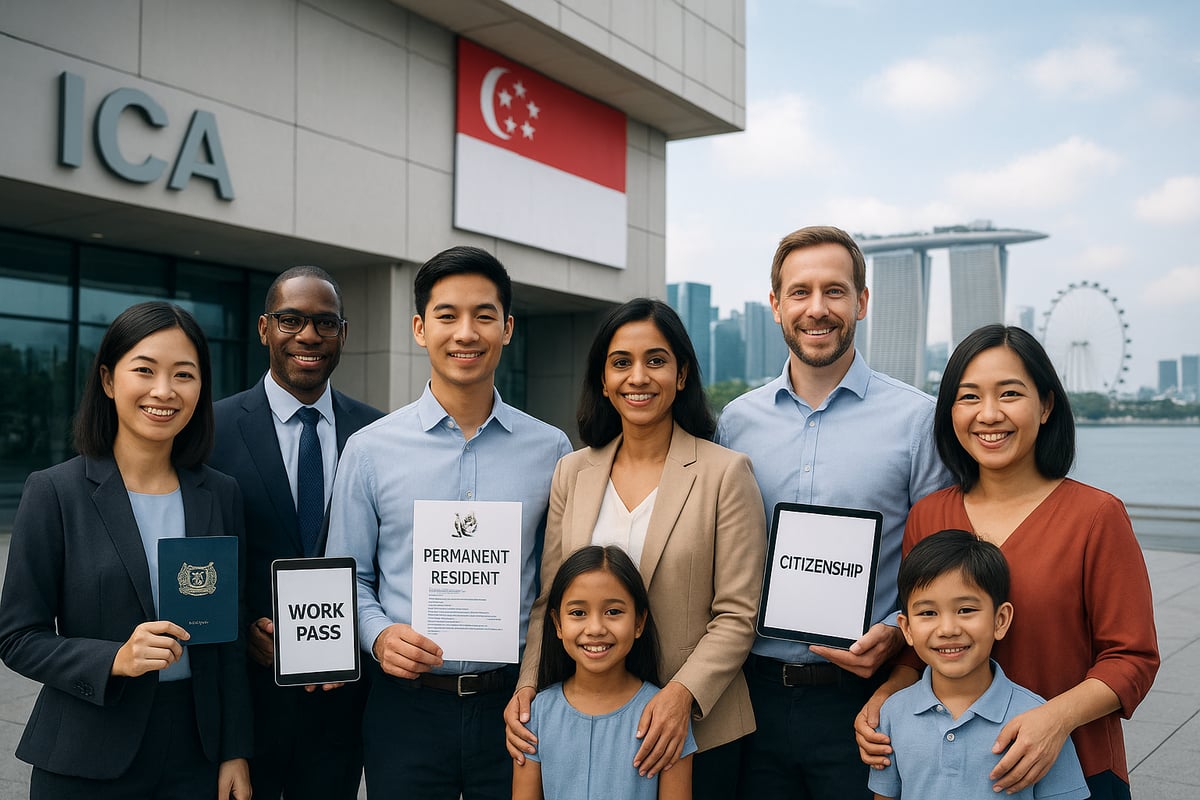
Singapore’s dynamic workforce attracts global professionals, entrepreneurs, and families seeking long-term prospects. Understanding the main pathways under the sg immigration framework is vital for a successful transition in 2026.
Employment Pass (EP), S Pass, and Work Permit
The sg immigration system offers several work passes tailored to different skill levels and industries. In 2026, the Employment Pass (EP) remains the primary choice for highly skilled foreign professionals, with a minimum monthly salary benchmark and sector-specific requirements. The S Pass targets mid-skilled staff, while the Work Permit addresses lower-skilled roles in sectors like construction and marine.
Recent updates include the COMPASS framework, which assesses candidates on qualifications, salary, diversity, and sector needs. Digital application processes are now standard, and quotas ensure a balanced workforce. For example, an IT professional may start with an S Pass, upskill, and progress to an EP as their career advances.
Approval rates for work passes have tightened, reflecting Singapore’s focus on high-demand sectors. The table below summarises key differences:
| Pass Type | Salary (2026) | Sector Focus | Processing Time | Quota/Levy |
|---|---|---|---|---|
| Employment Pass | $5,500+ | Finance, Tech | 3-8 weeks | No quota |
| S Pass | $3,000+ | Services, Tech | 2-4 weeks | Yes |
| Work Permit | N/A | Construction etc. | 1-3 weeks | Yes |
Navigating these routes is a core part of sg immigration planning and requires careful attention to eligibility criteria and documentation.
Permanent Residency (PR)
Securing Permanent Residency is a major milestone in the sg immigration journey. The most common PR scheme is the Professionals/Technical Personnel & Skilled Workers (PTS) route, which assesses applicants by age, education, experience, and economic contributions. Other pathways include the Global Investor Programme and Family Ties Scheme.
From 2026, a points-based system is used to evaluate applicants, making it essential to present a strong profile. PR approval rates hover around 30 to 35 percent, with average processing times of 6 to 12 months. It is crucial to avoid common mistakes and optimise your application for success.
For actionable advice, you may find these Singapore PR application tips valuable. For instance, a skilled professional with strong qualifications and family ties can significantly boost their approval odds by preparing a comprehensive application package.
Families often apply together, and the process includes checks on financial stability and integration plans. This key step in sg immigration provides long-term benefits, including access to public services and future citizenship eligibility.
Singapore Citizenship
Gaining Singapore citizenship is the final step for many on their sg immigration path. To be eligible, most applicants must have held PR status for at least two years, demonstrate financial stability, and show commitment to integrating into local society.
The application process requires detailed documentation, including proof of residency, income, and participation in community activities. Approval rates are selective, reflecting Singapore’s emphasis on social cohesion. Common pitfalls include incomplete records or insufficient evidence of integration.
A successful case might involve a PR who has contributed to the economy, volunteered locally, and demonstrated long-term intent to settle. With patience and preparation, citizenship becomes a realistic goal for those dedicated to the sg immigration journey.
Special Pathways and Fast-Track Programmes
Singapore’s sg immigration framework includes tailored options for entrepreneurs, investors, and exceptional talents. The Global Investor Programme allows high-net-worth individuals to obtain PR by investing in local businesses, while Tech.Pass targets leaders in the tech sector.
Recent updates have expanded fast-track opportunities in industries facing talent shortages, such as digital technology and biomedical sciences. These pathways often feature streamlined application processes and priority assessments.
For example, an entrepreneur who invests significantly in a Singaporean start-up may qualify for PR under the investor scheme. Such initiatives support Singapore’s ambition to remain a global innovation hub and make the sg immigration landscape accessible to top global talent.
Education and Family Immigration Opportunities
Singapore’s education and family immigration pathways continue to attract newcomers seeking opportunity and stability. For those planning their sg immigration journey in 2026, understanding these options is crucial to making informed decisions about your future in the Lion City.

Student Pass and Education Pathways
Singapore’s world-class education system is a key attraction for sg immigration applicants. The Student Pass is required for full-time international students at primary, secondary, and tertiary levels. In 2026, digital applications and streamlined renewals make the process more efficient.
Top universities, such as NUS and NTU, continue to rank highly in global league tables. In 2025, over 65,000 international students were enrolled in Singapore, with approval rates exceeding 85 percent. For example, a Malaysian applicant who secured a place at NUS benefited from the transparent, step-by-step Student Pass process. These opportunities make Singapore a leading destination for educational migration.
Dependant and Long-Term Visit Passes
Family-friendly policies are central to sg immigration strategy. The Dependant Pass is designed for spouses and children of work pass holders, while the Long-Term Visit Pass can cover elderly parents and common-law partners.
Applicants must provide proof of relationship, financial support, and integration plans. Common challenges include gathering the correct documentation and demonstrating sufficient income. For instance, a family from Indonesia successfully reunited in Singapore by preparing a comprehensive set of supporting documents, ensuring a smooth application. These pathways support family unity for new arrivals.
Education as a Route to PR and Employment
Education in Singapore is not just about academic growth, it is also a strategic step in the sg immigration process. Graduates from local institutions often benefit from enhanced PR approval rates, with recent statistics showing that over 40 percent of international graduates secure PR status within five years of graduation.
Integration programmes and career support services help foreign students transition from study to employment. For example, a Vietnamese graduate used the Graduate Employment Pass to enter the tech sector, later obtaining PR through the Professionals/Technical Personnel & Skilled Workers scheme. Education is a powerful springboard for long-term settlement.
Family Integration and Support Services
Successful sg immigration is about more than paperwork, it is about building a life in the community. Newcomers can access government support for housing, healthcare, and schooling. Integration programmes, language courses, and community events foster a sense of belonging.
Many families thrive thanks to these resources, with surveys showing over 90 percent satisfaction rates among recent arrivals. For tailored advice on adapting to local customs and building social networks, see this guide on how to integrate into Singapore society. Proactive integration leads to greater stability and happiness for immigrant families.
Special Programmes for Targeted Nationalities
Singapore recognises the unique needs of specific groups within sg immigration. Special schemes exist for Malaysians, Filipinos, and Myanmar nationals, reflecting close bilateral ties and workforce demands.
These programmes often feature streamlined processes and quota allocations. For example, a Filipino professional benefited from a fast-track application under a targeted skills scheme, allowing for quicker family relocation. Checking eligibility for such initiatives can open doors to a smoother transition and prompt settlement in Singapore.
Common Challenges and How to Overcome Them
Immigrating to Singapore presents immense opportunities but also comes with unique hurdles. Understanding the most frequent obstacles can help you navigate the sg immigration journey with greater confidence and success.
Documentation and Application Errors
One of the most common pitfalls in sg immigration is incomplete or inaccurate documentation. Many applicants overlook small details, such as missing signatures, outdated passports, or insufficient financial proof. These errors are among the top reasons for application rejections each year.
Typical mistakes include:
- Submitting expired or non-notarised documents
- Failing to provide certified translations
- Omitting supporting records like employment letters
To reduce the risk of rejection, always double-check requirements for your chosen pathway. Use official checklists and consider professional document review services. Digital tools can help track deadlines and ensure all paperwork is up to date. According to recent data, documentation errors account for over 30% of rejected sg immigration applications.
Navigating Policy Changes and Uncertainties
Singapore’s immigration landscape is dynamic, with policies evolving in response to economic demands and global events. Applicants must adapt quickly to new regulations, eligibility criteria, and updated documentation standards.
Staying informed is essential. Regularly check official government sources and subscribe to policy updates. For example, significant changes to the immigration framework were announced in the 2022 Budget, including updates to points-based assessments and application processes. For an in-depth review, see Singapore's Immigration Framework Changes.
When a major policy update occurs, review how it affects your sg immigration plans. If you are unsure, seek advice from a qualified consultant to ensure compliance and maximise your chances of approval.
Employment and Skills Matching
Securing a role that matches Singapore’s sector needs is crucial for sg immigration success. The government regularly updates its shortage occupation lists, focusing on sectors such as technology, healthcare, and engineering.
Applicants who align their skills and experience with in-demand industries have higher approval rates. Consider upskilling or gaining relevant certifications before applying. Research employer requirements and tailor your CV to highlight your fit for priority roles.
For example, IT professionals who acquire certifications in cybersecurity or cloud computing are more likely to secure Employment Passes. Staying ahead in your field gives you a competitive edge in the sg immigration process.
Financial Planning for Immigration
The financial aspect of sg immigration can be underestimated. Costs include application fees, notarisation, relocation expenses, and initial living costs. Budgeting in advance helps avoid unexpected setbacks.
Break down your expected expenses:
- Application and processing fees
- Housing deposits and rental costs
- School fees if relocating with children
- Daily living expenses
Explore financial support schemes or employer relocation packages where available. A well-prepared budget not only demonstrates financial stability to authorities but also eases your transition into Singapore life.
Integration and Cultural Adaptation
Adjusting to Singapore’s multicultural environment is an important part of the sg immigration journey. Newcomers may face challenges such as language barriers, unfamiliar customs, or homesickness.
To ease adaptation, join community support groups and participate in integration programmes offered by government agencies. Language courses and cultural workshops are widely available. Many immigrants find success by connecting with local networks and seeking mentorship.
For families, enrolling children in local schools and community activities accelerates integration. These steps foster a sense of belonging and help you thrive in Singapore’s vibrant society.
Resources, Tools, and Next Steps
Finding the right resources is essential for anyone navigating the sg immigration process. Whether you are at the beginning of your journey or preparing for the final steps, having access to accurate information, digital tools, and community support can make all the difference.
Official Government Websites and Digital Tools
Start with trusted sources for sg immigration. The Immigration & Checkpoints Authority (ICA) and Ministry of Manpower (MOM) are your primary gateways. Their websites provide up-to-date forms, eligibility requirements, and application portals.
A quick reference table:
| Resource | Website | Key Features |
|---|---|---|
| ICA | https://www.ica.gov.sg | PR/citizenship, Student Pass info |
| MOM | https://www.mom.gov.sg | Work passes, employment resources |
| SGDI | https://www.sgdi.gov.sg | Directory of SG government agencies |
Digital tools on these sites let you check application status, download documents, and access virtual help centres. For those seeking the latest in policy changes and digital application enhancements, review Singapore's 2026 Immigration Regulations for insight on new compliance requirements for travellers and residents.
Step-by-Step Application Checklists and Templates
Organisation is critical for a successful sg immigration journey. Prepare with downloadable checklists for each pathway, ensuring you gather all required documents before you begin.
Key checklist items include:
- Valid passport and passport-sized photos
- Education and qualification certificates
- Proof of employment or admission (if applicable)
- Financial documents and supporting letters
Many online resources offer templates for letters of explanation, sponsorship, and appeals. Use these to reduce errors and speed up application review.
Online Assessment Tools for Eligibility and Pathway Selection
Before applying, assess your readiness for sg immigration using official online tools. Both ICA and MOM offer self-assessment tools to evaluate your eligibility for PR, work passes, and student passes.
Features of these tools:
- Input your qualifications, work experience, and family ties
- Receive instant feedback on possible pathways
- Compare approval odds and processing times
These platforms help you choose the route that best matches your profile and long-term goals.
Frequently Asked Questions and Help Centres
The sg immigration process can raise many questions. Both government and independent sites maintain extensive FAQ sections covering topics from application requirements to post-approval steps.
Common questions answered include:
- What documents are required for each pass?
- How long do approvals take?
- What happens if my application is rejected?
If you need further clarification, virtual help centres and contact hotlines are available on the ICA and MOM websites.
Community Forums and Peer Support Networks
A supportive community can be invaluable during your sg immigration experience. Online forums, social media groups, and local associations connect newcomers with experienced residents.
Benefits of joining these communities:
- Access real-life advice and practical tips
- Share experiences and learn from others’ challenges
- Find support for integration, housing, and schooling
Popular platforms include Expat Forum Singapore, Reddit’s r/singapore, and Facebook groups tailored to specific nationalities.
Approved Immigration Consultancies and Legal Advisors
Complex sg immigration cases may require expert guidance. The Singapore government publishes a list of licensed immigration consultancies and legal advisors, ensuring you receive trustworthy advice.
Consultancies can assist with:
- Document review and error checks
- Appeal preparation for rejected applications
- Guidance on complex family or investor pathways
Always verify the credentials of any consultant before engaging their services.
Staying Informed and Ensuring Ongoing Compliance
Immigration policies in Singapore are dynamic, so staying updated is essential. Subscribe to official newsletters, set up alerts on ICA and MOM portals, and check reputable news sources regularly.
For a summary of recent changes, refer to Singapore's 2025 Immigration Policy Updates, which covers new rules affecting work passes and salary benchmarks. Staying proactive helps you avoid compliance issues and adapt to evolving requirements.
To keep your sg immigration status secure, remember to:
- Update personal details with authorities promptly
- Renew passes before expiry
- Attend integration programmes and community events
By leveraging these resources, you can confidently progress along your sg immigration journey and maximise your chances of long-term success.
As you explore this guide and gain a clearer picture of Singapore’s immigration pathways, you might find that having expert guidance can make all the difference in reaching your goals. Whether you’re weighing your eligibility, preparing documents, or choosing the best route for your career or family, personalised support can help you avoid common pitfalls and maximise your chances of success. If you’d like tailored advice or hands on assistance for your journey, we’re here to help you every step of the way.
Book an appointment


